China’s exterior windows industry has become a serious sourcing option for global buyers. Manufacturers now serve residential towers, hotels, schools, and energy-conscious homes. Yet choosing a reliable supplier requires more than comparing online prices.
Building-science expert Joseph Lstiburek often reminds practitioners, “A building enclosure is a system.” His point matters here. Exterior windows must work with walls, insulation, drainage, hardware, and installation methods. A beautiful frame can still fail when water enters around the sill. Small details matter.
This guide introduces China’s top 10 exterior windows manufacturers for global buyers. The selection considers product engineering, factory experience, export capability, quality controls, and customization. It also examines thermal insulation, air tightness, water resistance, glass options, and hardware durability. These factors become visible in practical scenes: condensation on a winter bedroom window, wind noise on a high-rise floor, or a warped door after heavy rain.
No ranking is perfectly universal. A supplier suited to a tropical villa may not fit a cold commercial project. Some companies present impressive catalogs but provide limited installation support. That deserves careful reflection. Buyers should request test reports, project references, sample units, and clear warranty terms. They should also confirm regional standards before placing a large order.
The manufacturers below represent different strengths, including aluminum systems, uPVC profiles, thermally broken frames, curtain-wall solutions, and premium custom designs. The goal is not to promote one material blindly. It is to help buyers ask better questions, compare practical evidence, and select exterior windows that perform beyond the showroom.
China Top 10 Exterior Windows Manufacturers for Global Buyers
China’s Exterior Window Industry: Market Scale, Materials, and Export Trends
China’s exterior window industry serves a large construction and renovation market. Its manufacturing base covers aluminum, uPVC, timber, and composite systems. Large production clusters support both standard orders and customized projects. In practical sourcing, buyers often compare profile strength, glazing options, drainage design, and installation support.
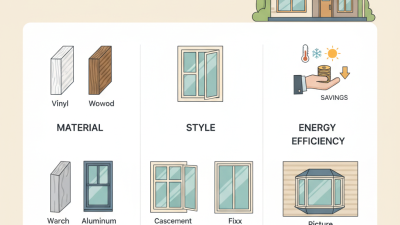
Aluminum windows remain popular for commercial buildings because they offer slim frames and strong weather resistance. Thermal-break aluminum improves insulation in cold or hot regions. uPVC windows provide competitive pricing and good sound reduction. Timber-aluminum systems create a warmer interior appearance, but they require tighter moisture control. Double glazing is common, while triple glazing suits colder climates and high-performance projects.
Export demand is moving toward energy efficiency, larger glass panels, safety hardware, and project-specific testing. Buyers also request documentation for air leakage, water resistance, wind pressure, and thermal performance. Coastal projects need careful attention to powder coating and corrosion protection. It is easy to trust an attractive catalog. That can be a mistake. Some factories show impressive samples but provide weak installation guidance or inconsistent batch control. A reliable evaluation should include factory audits, sample testing, hardware checks, packing details, and clear tolerance records. The industry is advanced, but not perfectly uniform. Procurement teams still need patience, technical review, and honest questions.
China Top 10 Exterior Windows Manufacturers for Global Buyers
Ranking China’s leading exterior window manufacturers requires more than comparing catalog numbers. U-factor should be measured for the complete window, not glass alone. A lower U-factor usually indicates better insulation. However, frame material, spacer design, sash size, and installation details can change the result.
SHGC needs a climate-based review. In hot regions, a lower SHGC can reduce solar heat entering a room. In colder climates, moderate solar gain may support heating efficiency. Air leakage must also be tested under a stated pressure, such as 75 Pa. Lower leakage is preferable, but test methods and reporting units must match. Comparing one laboratory report with another can create a false ranking.
An experienced buyer should request dated laboratory reports, sample configuration drawings, and production quality records. Check whether the tested window matches the proposed profile, glazing, hardware, and weather seals. I have seen attractive spreadsheets hide important differences. A narrow test sash may perform better than a larger production unit. That detail matters.
A practical ranking can assign separate scores for U-factor, SHGC suitability, and air leakage, then verify each score through independent testing. Inspectors should also review corner welds, gasket compression, drainage paths, and factory packaging. Numbers are useful. They are not enough. Small gaps around a frame can undermine excellent laboratory performance. Manufacturers that provide transparent data, repeat testing, and clear installation guidance deserve stronger consideration from global buyers.
China’s top 10 exterior window manufacturers serve residential, commercial, and coastal construction projects worldwide. Their product ranges often include thermal-break aluminum windows, uPVC systems, sliding doors, curtain wall units, skylights, and fire-rated assemblies. Strong suppliers provide Low-E insulated glass, multi-point locks, drainage channels, and customized colors. Some factories operate automated cutting, welding, glazing, and powder-coating lines. Others rely more heavily on skilled manual production.
Certifications deserve careful checking. Reliable manufacturers can usually provide ISO 9001 quality management records, CE documentation for applicable markets, and test reports for air leakage, water tightness, wind resistance, and thermal performance. Fire and acoustic certificates may apply only to specific models. Production capacity also varies widely, from small project workshops to facilities with several thousand square meters of monthly output. Factory audits, sample testing, and container-loading inspections reveal more than a polished catalog. A ranking is never perfect. Capacity figures can change, and published performance may depend on installation quality.
Tips: Request recent certificates, not generic files. Compare frame depth, glass specification, hardware origin, lead time, and warranty terms. Ask for a full-size sample before approving mass production. Check corner joints, gasket compression, drainage holes, and surface consistency. Small defects often appear only after installation. Supplier communication matters too, especially when drawings, packaging, and export documents require repeated review.
| Rank | Anonymous Manufacturer Profile | Main Exterior Window Products | Typical Frame Materials | Glass Options | Common Certifications & Standards | Indicative Annual Capacity | Typical Export Lead Time | Suitable Buyer Segments |
|---|---|---|---|---|---|---|---|---|
| 1 | Profile A — Large integrated manufacturer | Aluminium sliding, casement, lift-and-slide, folding and curtain-wall windows | Thermally broken aluminium; powder-coated or anodized finishes | Double or triple insulated glass; Low-E; laminated; tempered | ISO 9001; CE-related EN testing; ASTM/AAMA project testing available | 80,000–150,000 m²/year | 35–55 days | Commercial developments, villas and high-volume distributors |
| 2 | Profile B — Premium architectural systems supplier | Minimal-frame sliding, panoramic glazing, fixed windows and corner systems | High-grade thermally broken aluminium; reinforced profiles for large openings | Oversized insulated glass; Low-E; argon-filled; acoustic laminated glass | ISO 9001; EN 14351-1 testing; air, water and wind performance reports | 25,000–60,000 m²/year | 45–70 days | Luxury residential, hotels and architect-designed projects |
| 3 | Profile C — uPVC and aluminium volume producer | uPVC casement, tilt-and-turn, sliding and aluminium residential windows | Multi-chamber uPVC; standard and thermally broken aluminium | Double glazing; Low-E; clear, tinted and laminated options | ISO 9001; CE-related EN testing; RoHS documentation for selected components | 60,000–120,000 m²/year | 30–50 days | Housing projects, renovation contractors and regional importers |
| 4 | Profile D — High-performance energy-efficiency specialist | Passive-house-oriented casement, tilt-and-turn and fixed glazing systems | Deep thermally broken aluminium; reinforced uPVC options | Triple glazing; warm-edge spacers; Low-E; argon or krypton filling | ISO 9001; EN 14351-1; U-value, airtightness and acoustic test reports | 20,000–50,000 m²/year | 45–65 days | Energy-efficient homes, cold-climate projects and green buildings |
| 5 | Profile E — North American project supplier | Impact-rated windows, sliding doors, casement windows and commercial storefronts | Aluminium; reinforced vinyl; coastal-grade hardware options | Impact laminated glass; insulated Low-E; tempered safety glass | ISO 9001; ASTM E283/E331; ASTM E330; AAMA or NAFS testing where specified | 30,000–70,000 m²/year | 50–75 days | United States, Canada, coastal properties and hurricane-zone projects |
| 6 | Profile F — Australian and tropical-climate specialist | Awning, sliding, stacking, bifold and cyclone-resistant windows | Powder-coated aluminium; corrosion-resistant coastal finishes | Solar-control Low-E; laminated; toughened and double-glazed units | ISO 9001; AS 2047 testing; AS/NZS 4666 energy-performance assessment where applicable | 25,000–55,000 m²/year | 45–70 days | Australia, New Zealand, Southeast Asia and coastal developments |
| 7 | Profile G — European-style customization manufacturer | Tilt-and-turn, French casement, inward-opening and heritage-style windows | uPVC; aluminium; aluminium-clad timber options | Double or triple glazing; decorative bars; acoustic and safety glass | ISO 9001; EN 14351-1; CE performance documentation; FSC documentation for timber options | 15,000–40,000 m²/year | 40–65 days | European distributors, replacement-window contractors and custom residences |
| 8 | Profile H — Fire, acoustic and security glazing supplier | Commercial fixed windows, fire-rated glazing assemblies and acoustic windows | Steel-reinforced aluminium; specialized fire-rated framing systems | Fire-resistant; acoustic laminated; bullet-resistant or security glass by project | ISO 9001; EN 13501-2; EN 14351-1; project-specific fire and acoustic test reports | 10,000–30,000 m²/year | 55–90 days | Hotels, hospitals, schools, offices and infrastructure projects |
| 9 | Profile I — Mid-market OEM and private-label producer | Standard casement, sliding, awning, fixed and balcony-door systems | Aluminium and uPVC; configurable hardware and finish packages | Clear, tinted, Low-E, laminated and tempered double glazing | ISO 9001; EN or ASTM test packages selected according to destination market | 20,000–50,000 m²/year | 30–55 days | Importers, wholesalers, contractors and private-label brands |
| 10 | Profile J — Small-batch bespoke manufacturer | Custom-shaped windows, arched units, folding doors and special-size glazing | Aluminium; uPVC; timber-aluminium combinations by specification | Insulated, laminated, decorative, solar-control and shaped glass | ISO 9001 or documented quality-control system; EN/ASTM testing available per project | 8,000–20,000 m²/year | 50–85 days | Custom homes, boutique developments and restoration projects |
Note: The entries above are anonymized, non-brand-specific market profiles. Capacity and lead-time figures are indicative industry ranges rather than claims about any named company. Buyers should verify current certificates, laboratory reports, factory capacity, product test results and destination-market compliance before placing an order.
China’s top 10 exterior window manufacturers should be compared through verified thermal data, not catalogue claims.
EN 14351-1 supports conformity for windows and external doors in European markets. It works with declared performance values, including thermal transmittance.
NFRC 100 defines a rating method for U-factor in North American projects. Lower U-factor usually means better insulation.
However, EN and NFRC results are not automatically interchangeable. Their calculation methods, boundary conditions, frame assumptions, and reporting units can differ. A buyer should check whether the value covers the complete window, frame, glazing, and spacer. Glass-only performance can look impressive. The installed window may perform differently. This is where many comparisons become weak.
Tips:
Ask each supplier for laboratory reports, model dimensions, glazing details, and test conditions. Convert units carefully, but do not treat conversion as full equivalence. Review condensation resistance, air leakage, and installation guidance beside U-factor. A factory audit can also reveal process quality, such as corner welding, gasket placement, and thermal-break continuity. Photographs help, but controlled testing is stronger evidence. Even experienced buyers can overlook edge effects. Recheck the sample specification before signing a purchase contract.
China’s leading exterior window manufacturers attract global buyers with broad product ranges and export experience. Yet a polished catalog proves little without purchasing evidence. Ask each shortlisted factory for its minimum order quantity (MOQ), including separate limits for colors, glazing, hardware, and custom sizes. A low MOQ may hide higher unit costs or setup fees. Request a written production schedule. Standard windows may ship in 20–35 days, while engineered systems often require longer. Confirm whether holidays, tooling, and sample approval affect the promised lead time.
Tips: Request recent test reports, not only certificates. Check air infiltration, water resistance, wind-load, thermal performance, and acoustic results against your project requirements. Testing should identify the product series, dimensions, laboratory, and test date. Warranty terms need equal attention. Clarify coverage for frames, glass, seals, finishes, and hardware, plus claim procedures and exclusions. A ten-year warranty sounds useful, but replacement labor and freight may remain unclear.
Incoterms can change the real landed cost. Compare EXW, FOB, CIF, and DAP quotes with insurance, port charges, customs responsibility, and delivery points stated clearly. Before ordering, inspect samples and approve packaging details, corner protection, labels, and pallet dimensions. In my experience, small omissions create expensive delays. Factory audits and third-party pre-shipment inspections add confidence, though they cannot replace careful contract wording. Some buyers focus too heavily on price; that choice often needs reconsideration.