
Choosing an Automatic Cigarette making machine is not just a matter of comparing headline speeds. Buyers should examine output consistency, product specifications, maintenance access, and the space available on the factory floor. Small details matter. A clearly labeled control panel, guarded moving parts, and accessible service points can shape daily operation as much as rated capacity. Yet a brochure rarely tells the whole story.
For this overview, fictional composite equipment specialist Maya Chen offers a practical principle: “Choose for stable, supportable output—not the fastest number on a brochure.” Treat that as a prompt, not a verified quotation from a real industry authority. Ask suppliers for documented performance data, warranty terms, training options, and a realistic spare-parts plan. Where possible, review a machine demonstration and speak with existing customers about downtime and service response. A polished showroom is useful, but production conditions are different.
The right choice depends on the intended product, available operators, facility layout, and long-term service support. Compare machine specifications against your actual requirements, rather than paying for features you may never use. Check safety documentation and confirm that installation, operation, and maintenance procedures are clearly explained. These steps cannot remove every risk. They can, however, make the decision more transparent and easier to review. This guide explores the key questions to ask before selecting a machine.
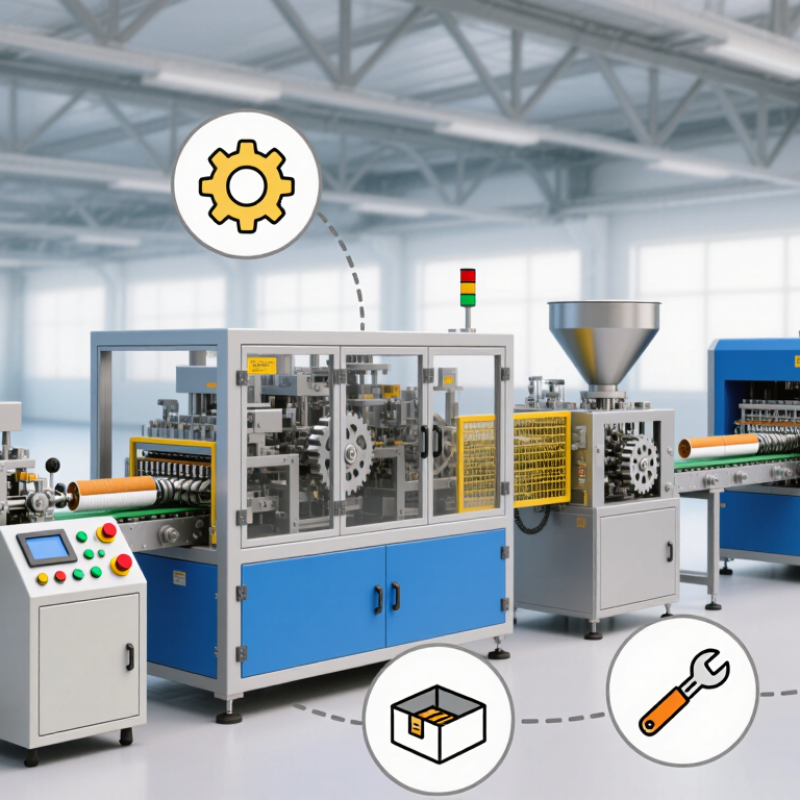
Automatic cigarette-making machines differ mainly in how much of the process they handle. Compact tabletop models usually fill pre-made tubes. They suit low-volume settings where an operator loads materials and checks each batch. Larger integrated machines may form paper rods, meter tobacco, cut them to length, and transfer finished products along a line. That distinction matters.
Most systems move material through a hopper into a metering section, which controls the amount used in each unit. A forming or filling mechanism then shapes the material inside paper, while a cutter sets a consistent length. Sensors can detect jams or irregular flow and pause the machine. In practice, sensor coverage varies, so operators still need to inspect output and keep clear maintenance records.
When comparing machine types, consider expected production volume, available floor space, cleaning access, and the skill needed for setup. A compact unit may be easier to manage, but require more hands-on attention. An integrated line can reduce repeated handling, yet may take longer to adjust after a changeover. Ask how the machine handles routine faults, and check whether its operating instructions explain safe cleaning clearly. Specifications look tidy on paper; real working conditions are less predictable.
Compare machine types by how many of five core operations they typically automate.
The score counts automated operations in a simplified comparison: tobacco feeding, rod forming, cutting, filter attachment, and output transfer. Manual machines typically automate few or none of these; semi-automatic models automate some; fully automatic configurations can automate all five. Actual functions vary by model, so confirm the included operations and line integration before choosing. This is not a production-rate comparison.
Before comparing automatic cigarette making machines, define the output you actually need. Estimate daily demand, operating hours, and likely growth over the next few years. Then compare that target with both the machine’s rated speed and its sustained output. Ask for test data under conditions similar to your planned shift. A fast headline number can look impressive. It may not reflect pauses for cleaning, adjustments, or routine maintenance.
Set a budget that includes more than the purchase price. Installation, operator training, replacement parts, and scheduled servicing can change the total considerably. Space matters just as much. Measure the doorway, floor area, ceiling height, and room needed for material handling and maintenance access. Leave clear paths around the equipment; a machine that fits tightly may be difficult to service. It is easy to underestimate this.
Write down your figures before requesting quotes, and ask suppliers to clarify what each estimate includes. Check that the proposed equipment suits your power supply, ventilation, and workplace safety requirements. A spreadsheet helps, but early estimates are rarely perfect. Recheck them after a site inspection.
Choosing an automatic cigarette making machine starts with matching output to actual demand. A high-speed unit can waste space and material if daily volume is modest. Check rated throughput against a realistic operating schedule, not just the largest number in a brochure. Ask whether feeding, forming, cutting, and collection run continuously or need frequent manual adjustment. Small interruptions matter. Observe a full cycle, including startup and changeover.
Controls should be readable and straightforward. Look for adjustable settings, clear fault messages, accessible emergency stops, and guards around moving parts. Check whether operators can clean and inspect the machine without awkward reaches. Materials matter too: stainless steel contact surfaces resist corrosion and are easier to wipe, while a rigid frame can help reduce vibration. Verify replacement-part availability and maintenance instructions. A polished screen is useful, but it does not prove reliability. Sometimes a simpler panel is easier to troubleshoot.
Tips: Bring a checklist to a machine demonstration. Record cycle time, noise, cleaning time, and adjustment steps. Ask to see the equipment after it has been running, not only when freshly prepared. Compare results under the same conditions. Leave room for doubt; estimates can be optimistic.
When evaluating an automatic cigarette-making machine, inspect its safety features before comparing output speed. Check that moving parts are guarded, emergency stops are easy to reach, and interlocks prevent operation during access. Test these controls during a supervised demonstration. Small details matter. Look for clear warning labels, stable access panels, and instructions workers can understand. Tobacco dust and repetitive handling also deserve attention; ask how the equipment supports ventilation, cleaning, and safe working posture.
Regulatory requirements vary by location and may cover equipment operation, workplace conditions, product controls, and recordkeeping. Ask the supplier for current technical documents, then have a qualified local compliance professional review them. Do not rely on a sales claim alone. Maintenance needs are just as practical: check whether routine cleaning points are accessible, lubrication intervals are documented, and replacement parts can be obtained reliably. Request a maintenance schedule and sample service log. In a real production setting, a machine that is difficult to clean may get cleaned less often. I would not assume the published service interval fits every shift pattern; confirm it against actual operating conditions.
Choosing an automatic cigarette making machine starts with the supplier, not the brochure. Ask for written specifications, service response times, spare-part availability, and references from comparable facilities. Request documented quality controls and clear warranty exclusions. Small details matter. A delayed sensor or unavailable belt can stop a line longer than expected.
Testing should happen before purchase, using agreed acceptance criteria and representative materials. Observe a full production run, not just a polished demonstration. Record output consistency, rejected units, changeover time, noise, and cleaning effort. Ask who pays for test materials and travel. Keep the results. If remote testing is the only option, request continuous video and signed records; it still offers less confidence.
Long-term cost includes more than the purchase price. Estimate electricity, compressed air, routine maintenance, consumables, training, downtime, and component replacement over several years. Compare cost per accepted unit, rather than headline speed. Confirm whether local technicians can service the equipment, and price critical spare parts before signing. A spreadsheet helps, but assumptions can be wrong. Revisit them with actual operating data after installation, while meeting applicable product, workplace, and environmental requirements.
Use this evaluation framework to compare suppliers and equipment on consistent, documented criteria. The suggested weights are a decision aid, not an industry standard; adjust them to suit your production requirements and applicable laws.
| Evaluation Area | Suggested Weight | What to Verify | Evidence or Test | Operating-Cost or Risk Consideration |
|---|---|---|---|---|
| Production requirements | 25% | Required output, product specifications, shift pattern, changeover frequency, and available floor space. | Request a written specification sheet stating rated output, test conditions, acceptable product tolerances, utilities, and exclusions. | Compare expected saleable output—not just rated speed. Account for changeovers, cleaning, stoppages, and rejected product. |
| Supplier capability and support | 20% | Relevant installation experience, technician availability, spare-parts policy, training, warranty terms, and service response commitments. | Check references for comparable installations; request a service plan, warranty document, spare-parts list, and training schedule. | Include travel, labor, shipping, import duties where applicable, and the expected time to obtain critical replacement parts. |
| Product quality and process control | 20% | Ability to meet agreed dimensions, weight or material-use tolerances, appearance requirements, and documented quality checks. | Agree acceptance criteria in advance. Inspect a representative sample and record measurements, defects, and test conditions. | Estimate material loss, inspection labor, rework, and disposal costs using the buyer's own production data. |
| Factory Acceptance Test (FAT) | Included above | Machine operation at the supplier's facility before shipment, using agreed materials and settings where feasible. | Run a written test protocol; record operating time, interruptions, output, rejects, safety checks, and open issues. Define pass/fail criteria in the contract. | Identify commissioning gaps before delivery. Clarify who supplies test materials and pays for travel, repeat tests, or corrective work. |
| Site Acceptance Test (SAT) | Included above | Installation and operation at the buyer's site with site utilities, operators, and production conditions. | Verify installation, guarding, emergency stops, electrical and air connections, operator training, and performance against agreed acceptance criteria. | Budget for installation labor, utilities, production downtime, commissioning, and any site modifications. |
| Pilot or extended run | Included above | Performance over a representative operating period, including planned stops, routine adjustments, and material changes. | Agree the run duration and log good output, rejects, downtime, interventions, and causes of stoppage. Use a consistent measurement method. | Provides better inputs for labor, yield, maintenance, and downtime estimates than a short demonstration alone. |
| Safety, compliance, and documentation | 15% | Machine guarding, emergency stops, risk documentation, electrical documentation, operating instructions, and applicable local requirements. | Review the risk assessment, manuals, maintenance instructions, and conformity documentation relevant to the destination jurisdiction. | Allow for required inspections, operator training, protective equipment, and any modifications needed for local rules. |
| Maintainability and parts | 10% | Access to routine service points, maintenance intervals, parts identification, service tools, and parts availability. | Request a preventive-maintenance schedule and recommended initial spares list. Confirm part numbers, lead times, and prices in writing. | Estimate annual parts and maintenance labor from the supplier's schedule, then validate with operating records after commissioning. |
| Commercial clarity | 10% | Scope of supply, delivery terms, payment milestones, installation responsibilities, warranty exclusions, and acceptance conditions. | Compare itemized quotations using the same specification, delivery location, test scope, and acceptance terms. | Look for excluded costs such as freight, taxes, tooling, software, commissioning, training, or site preparation. |
| Long-Term Operating Cost Worksheet | ||||
| Initial installed cost | Machine price + freight and insurance + duties and taxes + installation + commissioning + training + site preparation. | Use itemized supplier quotations and local charges. Record one-time costs separately from recurring costs. | ||
| Annual maintenance and parts | Preventive-maintenance labor + replacement parts + service visits + required tools or inspections. | Use the documented maintenance schedule and quoted parts list; update estimates with actual usage and service records. | ||
| Annual utilities and consumables | Measured electricity and other utilities + process consumables, calculated using local rates and actual usage. | Request utility requirements, then measure consumption during FAT or SAT where practical. Do not assume rated load equals average use. | ||
| Downtime and labor | Unplanned downtime hours × the buyer's documented cost per downtime hour + operator and maintenance labor. | Define downtime consistently and track its causes during pilot runs and normal production. | ||
| Total cost of ownership | Initial installed cost + recurring operating costs over the chosen evaluation period − any documented residual value. | Compare machines over the same period and production assumptions. State the currency, evaluation period, and assumptions used. | ||
Scoring method: Rate each applicable criterion from 1 (does not meet requirements) to 5 (fully meets documented requirements). Multiply each rating by its suggested weight, then compare weighted totals alongside the written FAT/SAT results and quoted total cost of ownership. All prices, performance figures, and acceptance limits should be confirmed for the specific machine, materials, site, and jurisdiction.
