What Are Residential Windows and How Do They Work?

When people look through a window, they often notice the view first. However, residential windows do much more than connect indoor rooms with the outdoors. They help control daylight, air movement, temperature, moisture, and outside noise. A window’s main parts include the frame, glazing, spacer, seals, hardware, and installation materials. Each part affects comfort and durability.

The glass may contain one, two, or three panes. Insulating gas can fill the spaces between them. Low-emissivity coatings may reflect heat while allowing useful daylight inside. The frame, made from vinyl, wood, aluminum, or fiberglass, supports the glass and influences energy performance. Openable designs also rely on hinges, locks, tracks, and weatherstripping. Small gaps matter.

This guide explains what residential windows are and how they work in everyday conditions. It explores fixed, casement, sliding, awning, single-hung, and double-hung styles. You will also see how U-factor, solar heat gain coefficient, visible transmittance, and air leakage describe performance. These ratings are useful, but they do not tell the entire story. Installation quality, wall design, shading, and local climate matter too.

No window is perfect.

In practical home assessments, a window may perform differently from its label. Poorly sealed joints can create drafts around otherwise efficient glass. A shaded window may reduce heat gain, while the same product could behave differently on an exposed wall. Understanding these details helps homeowners compare products realistically, avoid vague claims, and choose windows that support comfort, safety, and long-term building performance.

What Are Residential Windows and How Do They Work?

Residential Window Definition and Core Components: Frame, Glazing, Spacers, and Seals

Residential windows are building openings designed to admit daylight, provide ventilation, and separate indoor spaces from outdoor weather. Their performance depends on several connected parts, not glass alone. In home inspections, I look closely at the frame, glazing, spacers, and seals because small failures often become visible through drafts, moisture, or rattling.

The frame supports the entire window and attaches it to the wall opening. It may use wood, vinyl, aluminum, or composite materials. Each option balances strength, maintenance, insulation, and cost differently.

Glazing means the glass system, which may contain one, two, or more panes. Multiple panes create insulating airspaces and can reduce heat transfer. Low-emissivity coatings can also limit unwanted solar heat while preserving natural light.

Spacers hold separate glass panes at a consistent distance. Modern spacers also help reduce heat loss around the glass edge.

Seals close gaps between panes and protect the insulating space from outdoor air and moisture. When a seal fails, fogging may appear between the panes. That symptom deserves attention.

A well-built window works as a coordinated system. The frame carries loads, glazing controls light and heat, spacers maintain alignment, and seals resist air and water movement. Installation still matters. Even excellent components can perform poorly when the opening is uneven or poorly flashed. No window is perfect. Real performance depends on climate, workmanship, operation, and regular inspection.

How Windows Operate: Solar Gain, Conduction, Convection, and Air Leakage

What Are Residential Windows and How Do They Work?

How Windows Operate: Solar Gain, Conduction, Convection, and Air Leakage

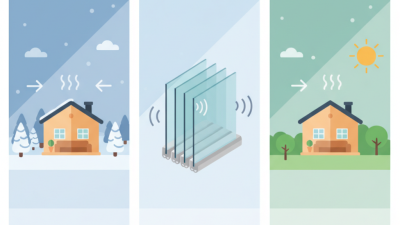
Residential windows are not just transparent openings. They control sunlight, heat flow, and outdoor air. The U.S. Department of Energy reports that windows can account for about 25–30% of household heating and cooling energy use. In summer, solar gain enters as sunlight warms floors, furniture, and glass surfaces. A low solar heat gain coefficient can reduce unwanted heat in warm climates. In colder regions, moderate solar gain may provide useful daytime warmth.

Conduction moves heat through glass, frames, and spacers. Convection develops when air moves inside insulated glass units or around the window opening. Wider air spaces can slow this movement, although design details matter. The National Fenestration Rating Council uses U-factor to measure heat transfer and SHGC to measure solar gain. Lower U-factor generally means better insulation. Still, ratings do not predict every installation. A well-rated window can perform poorly when the frame is misaligned or the seal is incomplete. Air leakage is often the quiet problem. The American Society of Heating, Refrigerating and Air-Conditioning Engineers links uncontrolled infiltration with energy loss and comfort problems.

Tips: Check U-factor and SHGC together. Inspect weatherstripping annually. On a windy day, feel around the sash with a thin tissue. Movement suggests leakage, but it does not identify the exact cause. Professional testing remains more reliable.

What Are Residential Windows and How Do They Work? — How Windows Operate: Solar Gain, Conduction, Convection, and Air Leakage
Operating Mechanism How It Works in a Residential Window Primary Direction of Heat or Air Transfer Important Metric Typical Values or Reference Range Effect on Comfort and Energy Use Design and Installation Measures
Sunlight passes through the glazing. A portion becomes heat inside the room, while the rest is reflected or absorbed by the glass and frame. Solar energy generally moves from the outdoors into the building. The amount depends on sun angle, orientation, shading, and glazing properties. Solar Heat Gain Coefficient (SHGC)
Fraction of incident solar radiation that enters a building as heat.
SHGC is expressed from 0 to 1. Common residential glazing values are approximately 0.25 to 0.60; lower values admit less solar heat. Useful solar gain can reduce heating demand in cold weather. Excessive gain can increase cooling loads, glare, and indoor temperatures. Choose SHGC according to climate and orientation. Use exterior overhangs, awnings, trees, blinds, or shades to control direct sun.
Heat travels through solid window components, including glass, spacers, sash, frame, and edge-of-glass areas, because of a temperature difference. Heat moves from the warmer side toward the colder side, either from indoors to outdoors during heating season or from outdoors to indoors during cooling season. U-Factor
Rate of heat transfer through the complete window assembly. Lower values indicate better insulating performance.
Window U-factors are commonly about 0.20 to 1.20 Btu/(h·ft²·°F), depending on the glazing and frame. High-performance products generally have lower values. Higher conduction can cause energy loss, cold interior surfaces, drafts caused by downdrafts, and increased condensation risk. Use multiple glazing layers, low-emissivity coatings, insulated frames, warm-edge spacers, and properly sized, continuous insulation around the opening.
Air inside the sealed insulating-glass cavity can circulate as it warms and cools. Room air can also move along the interior glass surface. Within a sealed cavity, warmer air rises and cooler air falls. In the room, air circulation can create downdrafts near a cold window. Glazing cavity design
Number of panes, cavity width, gas fill, temperature difference, and frame geometry influence convective transfer.
Double- and triple-glazed units reduce convection compared with single glazing. Sealed cavities are commonly filled with air or inert gas; performance varies with construction and installation. Uncontrolled cavity circulation or interior downdrafts can reduce comfort even when the window is closed. Convection inside a sealed unit is different from air leakage through gaps. Use sealed insulating-glass units, appropriate cavity spacing, low-emissivity coatings, interior curtains that do not block heat circulation, and adequate room-side airflow.
Air passes through unintentional gaps around the sash, frame, weatherstripping, operable hardware, or the connection between the window and wall. Air moves from the higher-pressure side to the lower-pressure side due to wind, stack effect, fans, and differences between indoor and outdoor air pressure. Air Leakage Rate
Measured airflow through a closed window at a specified pressure difference, often reported in cfm/ft².
Residential window air leakage is commonly reported at 75 Pa. Lower values indicate a tighter assembly; values around 0.10 to 0.30 cfm/ft² represent a useful comparison range for many products. Leakage can cause drafts, moisture entry, outdoor pollutant entry, noise transmission, and additional heating or cooling loads. Use continuous weatherstripping, locked and adjusted sashes, sealed joints, backer rod and sealant where appropriate, and a durable air barrier connection to the wall.
Water vapor in indoor air condenses when it contacts a window surface that is at or below the air’s dew-point temperature. Moisture moves from humid air toward colder surfaces; condensation forms on the indoor or outdoor surface depending on temperature and humidity conditions. Surface Temperature and Relative Humidity
Risk increases as indoor humidity rises and window-surface temperature falls.
At approximately 21°C (70°F) indoor air temperature and 50% relative humidity, the dew point is about 10°C (50°F). Persistent condensation can damage finishes, encourage mold growth, and indicate high indoor humidity, poor ventilation, or a cold window surface. Control indoor humidity, improve ventilation, maintain moderate interior airflow, reduce thermal bridging, and use better-insulated glazing where needed.
The window’s total thermal behavior combines solar gain, conduction through materials, convection, radiation, and air leakage. Net heat flow changes with outdoor temperature, solar intensity, wind, window orientation, indoor conditions, and operating position. Approximate heat-transfer relationships Conduction: Q = U × A × ΔT
Solar gain: Q = SHGC × A × I
Sensible air exchange: Q ≈ 1.08 × CFM × ΔT
A well-performing window balances low unwanted heat transfer, appropriate solar admission, low air leakage, daylight, ventilation, and occupant comfort. Evaluate the complete window assembly and installation rather than glass alone. Confirm that the selected performance levels suit the local climate and building orientation.
Notes: Values are representative ranges for residential windows and are provided for comparison rather than as a product specification. Actual performance depends on glazing type, frame material, window size, operating style, installation quality, climate, orientation, shading, and maintenance. U-factor and air-leakage units shown are commonly used in the United States.

Energy Ratings Explained: NFRC U-Factor 0.20–1.20 and SHGC 0–1.00

What Are Residential Windows and How Do They Work?

Residential windows control daylight, ventilation, views, heat, and sound through glass, frames, seals, and moving parts. Their energy performance depends heavily on two NFRC ratings: U-Factor and Solar Heat Gain Coefficient, or SHGC. U-Factor measures heat flow through the complete window. Its scale runs from 0.20 to 1.20. Lower values mean better insulation. A window rated 0.20 resists heat transfer more effectively than one rated 0.80.

SHGC ranges from 0 to 1.00. It measures how much solar heat enters through the window. A rating of 0.25 allows about 25% of available solar heat inside. Lower SHGC can reduce summer cooling demand, especially on west-facing glass. In colder climates, a moderately higher SHGC may provide useful winter warmth. The right number depends on orientation, shading, climate, and room use.

The U.S. Department of Energy reports that windows can account for roughly 25% to 30% of residential heating and cooling energy use. That figure explains why ratings matter. However, the label is not a perfect forecast. Installation gaps, poor flashing, damaged seals, and interior blinds can change real performance. The NFRC label evaluates tested products, not every jobsite condition. A practical review should consider both ratings together. A very low U-Factor can still produce uncomfortable sunlight if SHGC is too high. Small details matter.

Window Materials Compared: Vinyl, Wood, Aluminum, Fiberglass, and Composite Frames

Residential windows are assemblies, not just glass. They combine glazing, frames, seals, and operating hardware. Their job is demanding: admit daylight while limiting heat, air, and water transfer. According to the U.S. Department of Energy, windows can account for roughly 25–30% of residential heating and cooling energy use. Low-E glazing, insulated glass, and tight weatherstripping can reduce this burden. The National Fenestration Rating Council evaluates U-factor, solar heat gain coefficient, visible transmittance, and air leakage. These numbers matter more than appearance alone.

Vinyl frames usually offer low maintenance and consistent insulation, but expansion can affect fit. Wood provides warmth and strong insulation, though exposed surfaces need regular protection. Aluminum is slim and durable. Without a thermal break, however, it conducts heat quickly. Fiberglass resists moisture and temperature movement, making it useful in demanding climates. Composite frames can imitate wood while reducing upkeep, but their formulations and performance vary widely. The Efficient Windows Collaborative identifies frame material, glazing, climate, and installation as connected performance factors. Small details matter. A high-performing frame cannot rescue poor flashing or an uneven opening. I have also found that “best material” is an incomplete question. Budget, sun exposure, humidity, and repair habits change the answer. DOE field guidance repeatedly emphasizes correct installation because gaps can undermine rated efficiency. That part is easy to underestimate.

What Are Residential Windows and How Do They Work?

Window Frame Materials Compared by Representative Thermal Conductivity

Residential windows combine glazing, frames, spacers, weather seals, and operating hardware to control daylight, ventilation, heat transfer, and air leakage. This chart compares representative thermal conductivity values for common frame materials. Lower values generally indicate less heat transfer through the material itself, although the complete window design, frame geometry, glazing, and installation also determine real-world energy performance.

Values shown are representative midpoints in W/m·K: wood 0.15, vinyl/PVC 0.17, fiberglass 0.35, composite 0.30, and aluminum 170. Actual values vary by formulation, species, reinforcement, alloy, and construction.

Installation and Performance: DOE Estimates Windows Affect 25–30% of Home Energy Use

Residential windows are more than transparent openings in a wall. They control daylight, ventilation, heat flow, and indoor comfort. The U.S. Department of Energy estimates that windows influence about 25–30% of a home’s heating and cooling energy use. That impact becomes noticeable beside a cold glass pane or a sunny room that overheats by noon.

Installation strongly affects performance. A technically efficient window can still waste energy if the frame is poorly aligned. Small gaps around the opening may allow drafts, moisture, and outdoor noise to enter. Installers should check the rough opening, apply suitable flashing, and seal the perimeter carefully. The window must open smoothly without forcing the sash.

Glass selection matters too. Multiple panes create insulating air spaces, while low-emissivity coatings reduce unwanted heat transfer. Solar heat gain should match the local climate and room orientation. A south-facing window may need different protection than a shaded north-facing window. Interior curtains help, but they cannot correct a major installation defect.

In practice, homeowners often focus on the glass and overlook the wall connection. That is an understandable mistake. I would also avoid assuming every replacement window lowers bills immediately. Shade, air leakage, weather, and occupant habits affect results. A simple smoke-pencil test near the frame can reveal moving air, although it is not a substitute for professional inspection. Performance depends on the whole opening, not one impressive specification.