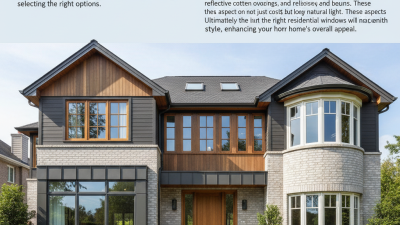
What Are the Best Exterior Windows from China?
Choosing the best exterior windows from China requires more than comparing catalog prices. It requires evidence, testing, and practical judgment. Chinese manufacturers now produce aluminum, uPVC, wood-clad, and thermally broken systems for homes, offices, and coastal buildings. Quality varies widely between factories.
Building-science expert Joseph Lstiburek has repeatedly used a simple warning: “A window is a hole in the wall.” That idea should guide every purchase. A beautiful frame means little if air leaks around the sash, rain enters the corners, or installation fails during winter. Experienced buyers examine U-values, solar heat-gain ratings, air infiltration, water resistance, hardware quality, glass configuration, and drainage design. They also request laboratory reports, product samples, factory videos, and references from completed projects. Real evidence matters.
Climate changes the answer. A window designed for a cold northern region may perform poorly in a hot, humid coastal city. Laminated glass may improve safety and sound control, while low-emissivity coatings can reduce heat transfer. Stainless hardware is often wiser near saltwater. Still, specifications can look impressive on paper. They are not guarantees. Installation drawings, packaging, lead times, replacement parts, and warranty support deserve equal attention.
No shortlist is perfect. Even a respected factory may deliver inconsistent batches. A sample can also hide production weaknesses. This guide compares leading Chinese exterior windows through performance, materials, customization, certification, service, and total project cost. The goal is not to name the cheapest supplier. It is to identify windows that remain dependable after years of sunlight, rain, wind, and daily use.

What Makes China-Made Exterior Windows a Strong Choice?
China-made exterior windows are a strong choice when quality, design flexibility, and project cost must work together. Their advantage is not simply lower pricing. Large manufacturing networks support automated cutting, precise welding, and repeatable assembly. In practical project reviews, I examine frame thickness, corner joints, drainage paths, and gasket compression. These details often matter more than a polished showroom sample.
Thermal-break aluminum frames can reduce heat transfer through the window structure. Low-E glass helps control indoor heat and sunlight. Laminated glass may improve safety and reduce outside noise. For coastal homes, suitable coatings and stainless-steel hardware can limit corrosion. Factory testing should cover air leakage, water resistance, and wind pressure. Ask for current test reports and clear material specifications. Do not rely on photographs alone.
Customization is another major strength. Manufacturers can produce different opening styles, colors, glass combinations, and unusual sizes. This suits villas, apartments, and commercial buildings with varied designs. However, shipping can add time, packaging risks, and replacement difficulty. Installation also remains critical. A well-made window can still leak if the opening is poorly measured or sealed. I have seen projects focus heavily on factory quality and overlook local installation skills. That is an uncomfortable, but useful, lesson. Choose products that fit the climate, building code, and actual site conditions.
Modern exterior windows made in China can be specified with high-performance glazing and insulated frames. This chart compares representative thermal transmittance values for common glazing configurations. A lower U-factor indicates better insulation; actual results depend on the complete window system and verified laboratory testing.
Which Exterior Window Materials from China Suit Different Buildings?
Choosing exterior windows from China should begin with the building, not the supplier’s catalog. Climate, wall exposure, maintenance access, and indoor humidity change the correct material. The U.S. Department of Energy reports that windows can cause 25–30% of residential heating and cooling energy use. Thermal performance deserves attention.
Thermally broken aluminum suits modern apartments, offices, and high-rise façades. It provides slim sightlines, strong wind resistance, and good fire performance. However, ordinary aluminum conducts heat quickly. Specify polyamide thermal breaks, low-emissivity glass, and insulated frames.
uPVC works well for homes, schools, and coastal projects because it resists corrosion and needs little repainting. Poor reinforcement can reduce sash stability. That risk is easy to overlook.
Fiberglass offers strong dimensional stability in buildings with large temperature changes. It fits energy-focused houses and premium renovations, although availability and fabrication skill may vary. Wood-aluminum windows add interior warmth while protecting the exterior from rain and ultraviolet exposure. They suit villas, hotels, and heritage-inspired buildings, but require better moisture detailing.
The International Energy Agency states that buildings account for about 30% of global final energy consumption, making glass selection important as well. For hot climates, lower solar heat-gain glass can reduce cooling loads; for cold climates, higher solar gain may help. These choices are not interchangeable.
A window that performs well on a shaded northern façade may fail on a western elevation. I would request tested U-values, air leakage, water penetration, and wind-load results before approving production. A beautiful sample is not enough.
How to Evaluate Energy Efficiency, Durability, and Weather Resistance
Choosing exterior windows from China requires more than comparing prices or frame colors. Energy efficiency begins with the complete window system. Check the U-value, solar heat gain coefficient, and air leakage rate. Lower U-values usually reduce indoor heat loss. Low-E glass, insulated spacers, and thermally broken frames can improve comfort. Look beyond the glass.
Request laboratory reports from accredited facilities, then compare their test conditions with local building requirements. A strong report should identify glass thickness, frame material, hardware, and exact window size. Oversized samples may perform better than real installations. This detail is easy to miss.
Durability depends on more than aluminum or uPVC quality. Inspect drainage paths, corner joints, seals, and locking points. For coastal projects, confirm resistance to salt exposure and corrosion. For cold regions, examine seal flexibility after repeated temperature changes. Weather resistance should include air infiltration, water penetration, and wind-load testing. Installation matters. Poor shimming or weak anchoring can defeat an excellent factory product. On site, check that the sill slopes outward and that flashing connects correctly with the wall system.
A practical evaluation should also consider maintenance. Ask how replacement gaskets, rollers, and hardware will be sourced years later. Some specifications look impressive but lack clear evidence. That is a warning sign. I would rather accept a slightly lower performance claim with traceable testing than trust an impressive number without documentation. Even reliable suppliers can make mistakes, so sample testing and independent inspection remain worthwhile.
What Customization and Design Options Do Chinese Window Manufacturers Offer?
Chinese window manufacturers offer extensive customization for exterior projects. Their options often begin with frame geometry, opening style, and glass selection. Sliding, casement, folding, tilt-turn, and fixed units can suit different elevations. Custom shapes are also available, including arches, triangles, and oversized panels.
Profile finishes range from matte black to wood-look textures and custom powder-coat colors. Some factories can match a project’s architectural color sample. Glass choices include double or triple glazing, low-emissivity coatings, laminated safety glass, and tinted panels. Decorative grids can sit between panes or on the glass surface. Screens, shutters, handles, locks, and concealed hardware can be coordinated too.
Small details matter.
For reliable results, request shop drawings with exact frame dimensions, drainage paths, reinforcement details, and installation tolerances. Ask for documented air, water, wind, and thermal performance. Local building requirements should guide the final specification, not only the catalogue. On practical projects, sample corners reveal more than attractive renders. They show gasket quality, weld consistency, drainage design, and surface finishing. A perfect drawing can still hide weak packaging or unclear installation instructions. That risk needs honest review. Color samples may also change under sunlight, so viewing them outdoors is worthwhile. Not every attractive option deserves approval.
How to Select a Reliable Chinese Exterior Window Supplier
Choosing exterior windows from China starts with the supplier, not the catalogue. A polished showroom can hide weak production control. Ask for factory photos, production records, and recent project references. Verify whether the supplier makes the windows or outsources key parts. Request samples with the same glass, frame, hardware, and finish as your project.
Technical evidence matters. Require test reports for air leakage, water resistance, wind pressure, thermal performance, and sound reduction. Check whether an independent laboratory issued these reports. Compare the tested window size with your actual design. A small sample may perform differently from a large sliding unit. Review installation details, drainage paths, corner joints, and hardware quality with a qualified window professional.
Tips: Send clear drawings, dimensions, glass specifications, color codes, and delivery terms. Ask for a written quality-control plan and inspection points before production. Confirm who pays for replacement parts and how claims are handled. Use a pre-shipment inspection when the order is important. Keep every approval in writing.
Do not select the lowest quotation automatically. It may exclude packaging, testing, installation guidance, or spare hardware. I have seen attractive samples fail because the drainage design was overlooked. That mistake is easy to repeat. Start with a small trial order, inspect the packaging, and test the installation before expanding the purchase. Reliable suppliers answer technical questions directly and admit limitations when a design needs revision.