Choosing double windows for global sourcing is not simply a matter of comparing prices. The right choice must balance thermal performance, durability, installation conditions, and long-term support. A window that performs well in a Canadian winter may behave differently in a humid coastal region. Climate matters. So does the building envelope.
Dr. Joseph Lstiburek, a respected building scientist, said, “Buildings are nothing more than control layers.” This principle is valuable when evaluating double windows. Buyers should examine U-value, solar heat gain coefficient, air leakage, water resistance, glass configuration, spacer materials, and frame quality. Ask for verified test reports, not attractive claims. Check whether the supplier follows recognized standards and can provide consistent production records. A small sample may look perfect. Production quality can still vary.
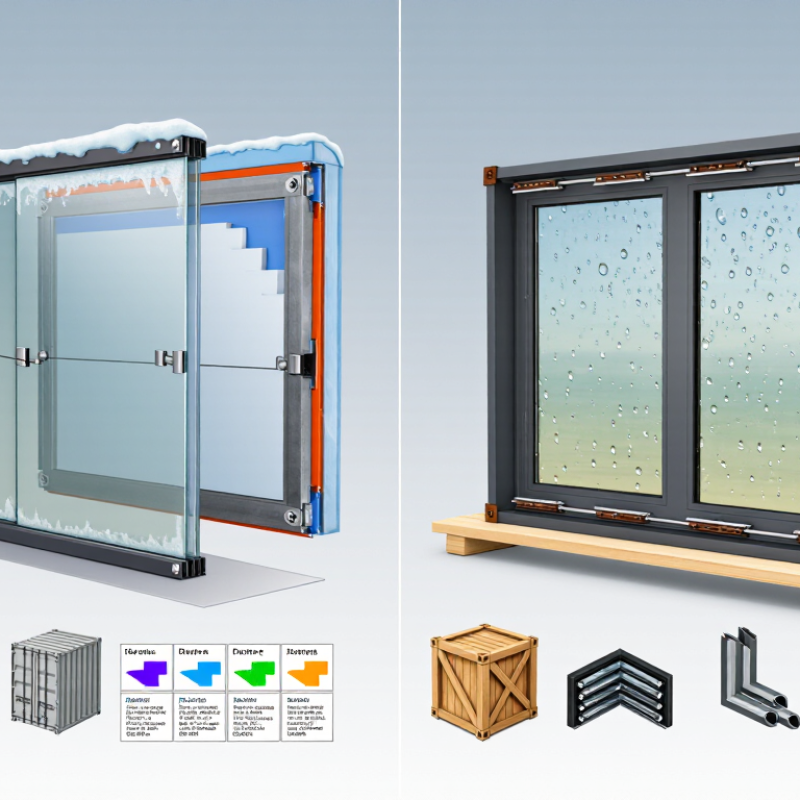
Global sourcing also requires practical checks. Review packaging methods, container loading, replacement procedures, lead times, and communication habits. Request corner samples and test hardware before placing a large order. Inspect the sealant line closely. It should look continuous, clean, and firmly bonded. I have seen projects focus heavily on unit cost while overlooking installation tolerances and after-sales support. That mistake becomes expensive when damaged units arrive thousands of miles away.
There is no universal winner. Sometimes, a slightly higher-priced double windows system offers better insulation and fewer service problems. Sometimes it does not. Compare the complete ownership cost, including freight, duties, installation, energy use, and potential replacement. Reliable sourcing comes from evidence, careful questions, and a willingness to reconsider assumptions.
Choosing double windows for global sourcing starts with the building’s climate, use, and installation limits. A double window may mean two operable sashes or a paired unit with one fixed panel. Confirm the definition with the supplier. Terms vary across markets.
Casement windows open outward on hinges and ventilate strongly. Sliding windows save exterior space but usually provide a smaller clear opening. Tilt-and-turn units offer ventilation and inward cleaning access. They require accurate hardware installation.
Material selection affects durability, weight, thermal performance, and maintenance. uPVC suits many residential projects and resists moisture. Aluminum is slim and strong, but thermal breaks matter in hot or cold regions. Timber feels warm and performs well when properly sealed. It demands regular coating checks. Composite frames can balance strength and insulation, though local repair methods may be less familiar.
Ask for frame sections, gasket samples, and measured thermal data. Do not rely on attractive catalogue images.
For sourcing, specify glass build-up, spacer type, gas fill, drainage, screens, locks, and opening direction. Low-emissivity glass can improve insulation, but solar exposure still needs review. Check sample corners for weld quality and gasket continuity.
I once treated a sample as representative; the production batch differed slightly. That mistake was avoidable.
Request a pilot order and inspect dimensions before mass production. Verify test reports, factory quality records, packaging, and installation guidance against destination-market requirements. A window that performs well in the factory may fail after poor shipping or fitting.
Double windows should match the climate, building design, and energy target, not just the purchase price. In cold regions, select low-emissivity glass, warm-edge spacers, and insulated frames to reduce indoor heat loss. In hot climates, solar-control glass can limit glare and cooling demand. Yet dark glass is not always better. It may reduce daylight and increase lighting use.
Building orientation also matters. South- or west-facing windows often receive stronger solar exposure. Ask suppliers for U-value, solar heat gain coefficient, visible transmittance, air leakage, and water resistance data. These figures help compare products across markets. Check the testing standard, test size, and installation method too. A certified result may not reflect a poorly fitted window.
Tips: Review the local weather first. Test samples in a real wall section when possible. Confirm frame performance, drainage paths, hardware quality, and replacement access. For coastal projects, request corrosion-resistant components. For high-rise buildings, consider wind pressure and safe glass selection. Installation can change performance dramatically. We sometimes focus too heavily on laboratory numbers and overlook the installer’s skill. That is a costly lesson. Allow space for local adjustment, because construction tolerances and site practices vary between countries.
Start with the glazing. Double windows should be compared by U-value, solar heat gain coefficient, visible transmittance, and air leakage. The U.S. Department of Energy reports that windows can represent 25–30% of residential heating and cooling energy use. A lower U-value usually improves insulation. However, excessive solar gain may increase cooling demand in warm regions. The climate must guide the specification.
The air space also matters. A sealed cavity with inert gas can reduce conductive heat transfer. Ask suppliers for tested performance, not only advertised values. NFRC procedures define consistent methods for rating U-factor and solar heat gain. Frame design deserves equal attention. Thermally broken metal frames can limit cold bridges, while reinforced profiles may resist distortion during shipping and installation. Small design differences can affect comfort.
Seals are easy to overlook. Inspect corner joints, compression gaskets, drainage paths, and sealant compatibility. The U.S. Department of Energy identifies air leakage as a major source of window energy loss. A practical sourcing audit should review laboratory reports, production samples, and climate-specific simulations. I would not trust a brochure alone. A lower U-value does not guarantee a better window. Sometimes, the weakest gasket controls the whole assembly. That detail is easy to miss. Procurement teams should also check whether testing reflects the finished window, not merely the glass unit.
How to Choose Double Windows for Global Sourcing?
Choosing double windows for global sourcing requires more than comparing quoted prices. Start with the destination market’s performance standards. Check U-value, air leakage, water resistance, wind pressure, and acoustic performance. These figures affect comfort, energy use, and installation risk. Requirements can differ sharply between climates and jurisdictions.
Certifications should match the exact window system, not only the factory. Request current certificates, laboratory reports, and test methods. Confirm the glass type, spacer, frame material, hardware, and dimensions shown in each report. A certificate with an unclear scope deserves careful questioning. Ask whether testing was completed on a full assembled window. Small differences matter.
Supplier evaluation should combine documents with direct evidence. Review manufacturing records, quality-control procedures, and corrective-action reports. If possible, inspect a production line before placing a large order. Look for clean sealing stations, calibrated equipment, protected glass, and organized storage. Ask for a pre-production sample and compare it with the approved drawing. I have seen attractive samples fail during mass production. That mistake is expensive. Factory experience helps, but it can also create overconfidence.
Request inspection photos from several production stages. Check corner joints, gasket compression, drainage holes, and surface finish. Measure random units independently. A supplier may meet specifications on paper yet miss consistency in practice. Keep written acceptance criteria, packaging requirements, and tolerances. Clear records reduce disputes and reveal weak manufacturing habits early.
| Comparison dimension | Typical requirement or benchmark | Relevant standard, test, or certification | What the buyer should request | Common sourcing risk |
|---|---|---|---|---|
| European Economic Area market access | Performance declaration and applicable conformity route for windows and external pedestrian doorsets. | EN 14351-1+A1; Construction Products Regulation requirements where applicable; CE marking is not itself a quality grade. | Declaration of Performance, product scope, notified-body or assessment details where required, and test reports matching the offered configuration. | A certificate is presented for a similar model, but not for the actual frame, glass, hardware, or size being purchased. |
| North American market | Performance class and rating based on the complete window assembly, including frame, sash, glazing, and hardware. | AAMA/WDMA/CSA 101/I.S.2/A440; NFRC 100 for U-factor and solar heat gain coefficient; NFRC 200 for solar and visible transmittance. | NFRC label or simulation report, NAFS performance class, product designation, gateway size, and tested air, water, and structural results. | Glass-only thermal data is quoted as if it were the whole-window rating. |
| Australia and New Zealand | Windows must satisfy required weather-resistance and structural performance for the project location and exposure category. | AS 2047 for windows and external glazed doors; project energy compliance may also require local regulatory calculations. | Evidence of compliance, water penetration results, ultimate strength data, operating-force information, and location-specific wind assessment. | A generic laboratory result is used without checking the required wind pressure or exposure classification. |
| Thermal performance | A typical low-emissivity argon-filled double-glazed unit may achieve a center-of-glass Ug of approximately 1.0–1.2 W/m²K; whole-window Uw is usually higher because of the frame and edge. | EN ISO 10077-1 and EN ISO 10077-2; ISO 10292 may be used for glass thermal calculations; NFRC 100 is common in North America. | Uw or U-factor at a stated reference size, glass build-up, spacer type, frame material, gas fill, emissivity, and calculation method. | A low Ug value is advertised while the completed window has a substantially poorer Uw value. |
| Air permeability | Lower air leakage is preferred, especially for conditioned buildings and high-rise applications. | EN 1026 test method and EN 12207 classification; ASTM E283 is widely used in North America. | Air-leakage rate, pressure sequence, classification, sample size, test date, and whether the result applies to the complete product. | Only a laboratory sample is tested, while production tolerances and seal compression are not controlled. |
| Water tightness | The required pressure depends on building height, façade exposure, drainage design, and local weather conditions. | EN 1027 test method and EN 12208 classification; ASTM E331 and ASTM E547 are common alternative tests. | Test pressure, duration, leakage criteria, drainage configuration, specimen size, and installation method used during testing. | A water test is reported without stating pressure or without including sill, drainage, and corner details. |
| Wind and structural resistance | The product must resist design wind loads without unsafe deformation, failure, or loss of operation. | EN 12210; EN 12211 test method; ASTM E330/E330M; NAFS performance classes where applicable. | Design pressure, positive and negative pressure results, deflection limits, glass thickness, reinforcement, and maximum tested dimensions. | The quoted window is larger than the tested specimen or uses a different mullion, reinforcement, or glass thickness. |
| Insulating glass unit construction | Common configurations include 4–16–4 mm or 4–18–4 mm glass; actual suitability depends on climate, size, safety, acoustic, and solar requirements. | EN 1279 series for insulating glass units; ASTM E2190 for insulating glass performance in North America. | Glass thickness, cavity width, gas type and fill target, low-e surface position, spacer, sealant system, and durability evidence. | The supplier changes spacer or sealant materials without recalculating thermal performance or confirming compatibility. |
| Condensation control | Warm-edge spacers and improved frame design can reduce edge condensation, but indoor humidity and ventilation remain decisive. | Thermal transmittance calculation under EN ISO 10077; surface-temperature and condensation assessments should use project conditions. | Frame and glass-edge temperatures, ψ-value where available, assumed indoor humidity, outdoor temperature, and ventilation conditions. | A thermal rating is treated as a guarantee against condensation in every climate and room condition. |
| Acoustic performance | Standard symmetrical double glazing offers moderate noise reduction; laminated or asymmetrical glazing is often needed for higher acoustic targets. | ISO 10140 test methods; ISO 717-1 rating; ASTM E90 and ASTM E413 in North American projects. | Weighted sound reduction index or STC rating, frequency spectrum, test specimen, ventilation openings, and installation assumptions. | A laboratory glass rating is quoted for a complete window with different frame, seals, or trickle vents. |
| Supplier type | Specialist fabricator: strong customization and technical control; trading supplier: broader access but more dependence on subcontractors; integrated manufacturer: better process traceability but usually less flexible for unusual designs. | No single certification proves supplier capability; evaluate audited quality systems and product-specific evidence. | Factory profile, equipment list, production capacity, subcontracting map, quality manual, inspection records, and export references without relying only on photographs. | The commercial intermediary cannot control changes in glass, hardware, sealants, or production location. |
| Manufacturing quality system | Consistent incoming inspection, process control, final inspection, corrective action, and batch traceability. | ISO 9001 can support process management, but it does not certify a particular window's performance. | Valid certificate scope and expiry, control plans, calibration records, nonconformance reports, lot coding, and retention samples. | An expired or unrelated management-system certificate is used as proof of product conformity. |
| Factory production controls | Critical controls should include frame dimensions, corner joining, gasket continuity, glazing blocks, drainage, sealant application, and hardware adjustment. | Supplier-specific inspection plan supported by applicable product and test standards. | Inspection frequency, acceptance limits, measurement tools, operator training records, and photographs or videos linked to batch numbers. | Final visual inspection is performed, but hidden defects in seals, drainage, or reinforcement are not checked. |
| Quality inspection before shipment | Inspection should confirm dimensions, appearance, operation, glazing, accessories, labels, packaging, and quantity. | Purchase specification, approved sample, inspection checklist, and agreed acceptance criteria; statistical sampling may use an agreed AQL plan. | Pre-shipment inspection report, dimensional records, operating test, glass markings, packaging photos, and independent inspection option. | Inspection is carried out against a showroom sample rather than the signed technical specification. |
| Lead time and minimum order quantity | Typical export lead times vary widely: approximately 4–8 weeks for standard production after approved drawings; custom systems, testing, or peak seasons may extend this. | Commercial term rather than a technical standard. | Written lead-time milestones, drawing approval date, glass procurement date, production completion date, inspection date, and realistic MOQ by model or container. | The quoted lead time excludes design approval, tooling, glass production, testing, or export documentation. |
| Packaging and international logistics | Units require stable vertical support, edge protection, moisture control, identification, and protection against impact and movement. | Packaging specification agreed in the purchase contract; applicable shipping and customs requirements should be checked by destination. | Packing drawings, loading plan, moisture protection, crate treatment where required, carton labels, spare-parts policy, and damage-claim procedure. | Correct products leave the factory but arrive with broken glass, distorted frames, scratched coatings, or missing hardware. |
| Warranty and after-sales support | Coverage should separately address insulating glass seal failure, frame finish, hardware, glass breakage, installation, and replacement parts. | Contractual warranty terms; local consumer and construction laws may apply. | Warranty duration, exclusions, response time, replacement process, spare-parts availability, installation responsibility, and claim evidence requirements. | The warranty is valid only in the production country or excludes installation and replacement logistics. |

A low unit price can hide expensive risks. Compare the complete landed cost, including glass specification, frame materials, packaging, inspection, duties, insurance, and installation. The U.S. Department of Energy reports that windows can cause 25–30% of residential heating and cooling energy use. Therefore, compare U-values, solar heat gain coefficients, air leakage, and certified test results, not only the purchase price. A cheaper window is not always cheaper.
Logistics needs equal attention. The World Bank’s 2023 Logistics Performance Index evaluates customs, infrastructure, international shipments, logistics competence, and delivery timeliness. Ask suppliers for pallet dimensions, container loading plans, moisture protection, replacement procedures, and realistic lead times. Confirm Incoterms and quote validity in writing. A perfect spreadsheet can still miss port delays or damaged glass. That is an uncomfortable but useful lesson. Installation support also matters. Request step-by-step manuals, local training, compatible sealants, and remote technical assistance. Poor installation may reduce insulation and create water leakage, even when the product passed laboratory tests.
Tips: Require a sample installation before placing a large order. Check whether replacement parts remain available for several years. Ask for response-time commitments, warranty exclusions, and a clear claim process. The OECD’s product-safety guidance supports traceability and documented corrective actions. Keep photographs, batch numbers, inspection records, and signed delivery notes. Do not rely on verbal promises. Some suppliers answer quickly before payment, then respond slowly afterward. Test that assumption early.