
Who Are the Top Residential Window Manufacturers in China?
Choosing a Chinese manufacturer for residential windows requires more than comparing showroom prices. A polished frame sample cannot reveal how a complete window performs after years of rain, heat, and daily use. Buyers should examine product specifications, factory quality controls, installation support, and service arrangements. Small details matter: gasket fit, corner joints, drainage paths, and hardware movement.
Building-science expert Joseph Lstiburek has long emphasized that window performance depends on the whole building assembly. A practical paraphrase of his guidance is simple: judge the installation, not just the glass. That distinction matters in residential projects, where wall design, local climate, and installation quality all affect comfort. A low heat-transfer rating is useful, but it does not answer every question. Ask how the tested configuration compares with the product being quoted.
This guide explores leading residential window manufacturers in China and the strengths buyers may want to compare. It considers materials, customization, energy performance, manufacturing capacity, and export experience. It also points to questions worth asking before requesting a quotation, such as whether test reports cover the exact frame and glass combination. Claims deserve scrutiny. Not every impressive catalogue tells the full story. A supplier may be a good fit for one project and a poor match for another. That is easy to overlook. The goal is not to declare one universal winner, but to help readers build a more informed shortlist and verify the details that matter before making a decision.
How China’s Residential Window Manufacturing Industry Is Structured
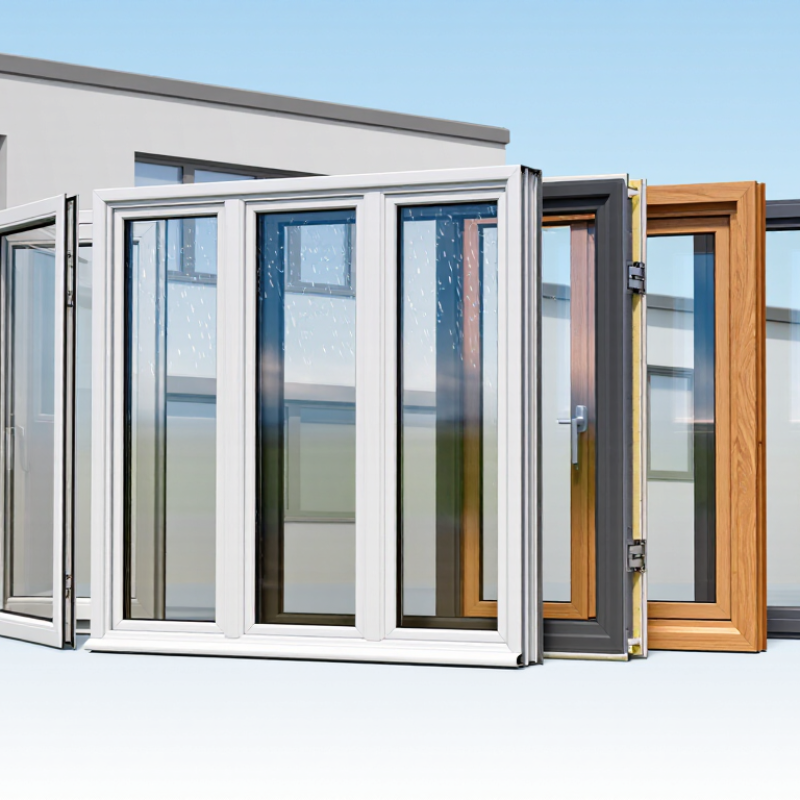
China’s residential window industry is not a single market led by one type of factory. It includes large manufacturers with in-house profile, glass, and assembly operations, alongside regional producers focused on fabrication and installation. Some suppliers specialize in aluminum systems; others work mainly with uPVC, wood, or mixed-material designs. The map is not perfectly neat.
Behind a finished window sits a network of profile extruders, glass processors, hardware suppliers, and assembly workshops. Manufacturers may buy components from outside partners or control more steps themselves. That difference can affect customization, lead times, and quality checks. A factory with an impressive showroom is not automatically strong in every product category.
For buyers, compare the complete window configuration, not just the frame material. Ask for reports matching the specified glass, hardware, dimensions, and opening style. Check how the supplier handles drainage details, seals, and corner joints; these small features matter when heavy rain hits a window sill. Site installation also shapes real performance, yet it is easy to overlook. A careful evaluation takes time, and supplier descriptions can leave gaps. That is worth acknowledging.
Who Are the Top Residential Window Manufacturers in China? - How China’s Residential Window Manufacturing Industry Is Structured
| Industry segment | Typical role in the market | Common residential products | Manufacturing and sales model | Useful comparison criteria |
|---|---|---|---|---|
| Large, integrated manufacturers | Produce finished windows at scale and may coordinate design, fabrication, quality control, and installation support. | Aluminum, uPVC, and other framed window systems; sliding, casement, and tilt-and-turn designs may be offered. | Typically use centralized production facilities, distribution networks, project sales, or a combination of channels. | Production capacity, product range, documented test results, delivery scope, warranty terms, and service coverage. |
| Regional window fabricators | Serve local residential construction and renovation demand, often adapting products to local designs and installation requirements. | Made-to-measure windows, commonly using aluminum or uPVC profiles and insulating glass units. | Usually combine local fabrication with direct sales, contractor relationships, measurement, and installation services. | Measurement and installation process, workmanship, lead time, after-sales response, and references for comparable projects. |
| OEM and ODM suppliers | Manufacture products to a buyer’s specifications; ODM suppliers may also provide product design or configuration support. | Custom-sized residential windows, configured with selected frames, glazing, hardware, finishes, and opening styles. | Commonly work through project orders, private-label arrangements, or export contracts rather than relying solely on a consumer-facing retail network. | Drawing and specification control, sample approval, production consistency, packaging, inspection records, and export documentation. |
| System and component suppliers | Supply profiles, hardware, seals, glazing, or system designs used by window fabricators; they may not manufacture the complete installed window. | Aluminum or uPVC profiles, thermal-break components, hinges, locks, gaskets, and insulating glass units. | Sell components or technical systems to fabricators, distributors, and construction projects. | Material specifications, compatibility of components, technical documentation, traceability, and supply continuity. |
| Premium and specialist manufacturers | Focus on higher-specification, architect-led, custom, or performance-sensitive residential projects. | Customized aluminum, timber, or composite-frame systems; glazing and hardware options depend on the project specification. | Often rely on project consultation, technical detailing, specialist fabrication, and coordinated installation. | Project-specific test evidence, thermal and acoustic design data, detailing capability, installation quality, and service obligations. |
| Performance and compliance checks | Help buyers compare finished windows using evidence relevant to the intended building, location, and use. | Check the complete window assembly, including frame, glazing, hardware, seals, and installation details. | Request product-specific specifications and test reports; applicable requirements depend on project location and contract. | China’s GB/T 8478-2020 covers aluminum alloy windows and doors. GB/T 7106-2019 specifies test methods for air permeability, watertightness, and wind-load resistance of building exterior windows and doors. Confirm the applicable edition and project requirements. |
Note: This table describes common manufacturer and supplier categories rather than ranking individual companies. Product performance, code requirements, and appropriate specifications vary by project and location; verify current documentation with the supplier and project professionals.
Related Posts
-
What Are Residential Windows and How Do They Work?
-

Essential Tips for Choosing House Windows Wisely?
-

How to Choose the Best Residential Windows?
-
How to Choose the Best House Windows for Your Home in 2026?
-

Top 10 Benefits of Retrofit Windows for Energy Efficiency and Comfort
-
How to Choose Double Windows for Global Sourcing?